

Best Postpaid SIM Cards in Canada for Newcomers 2026
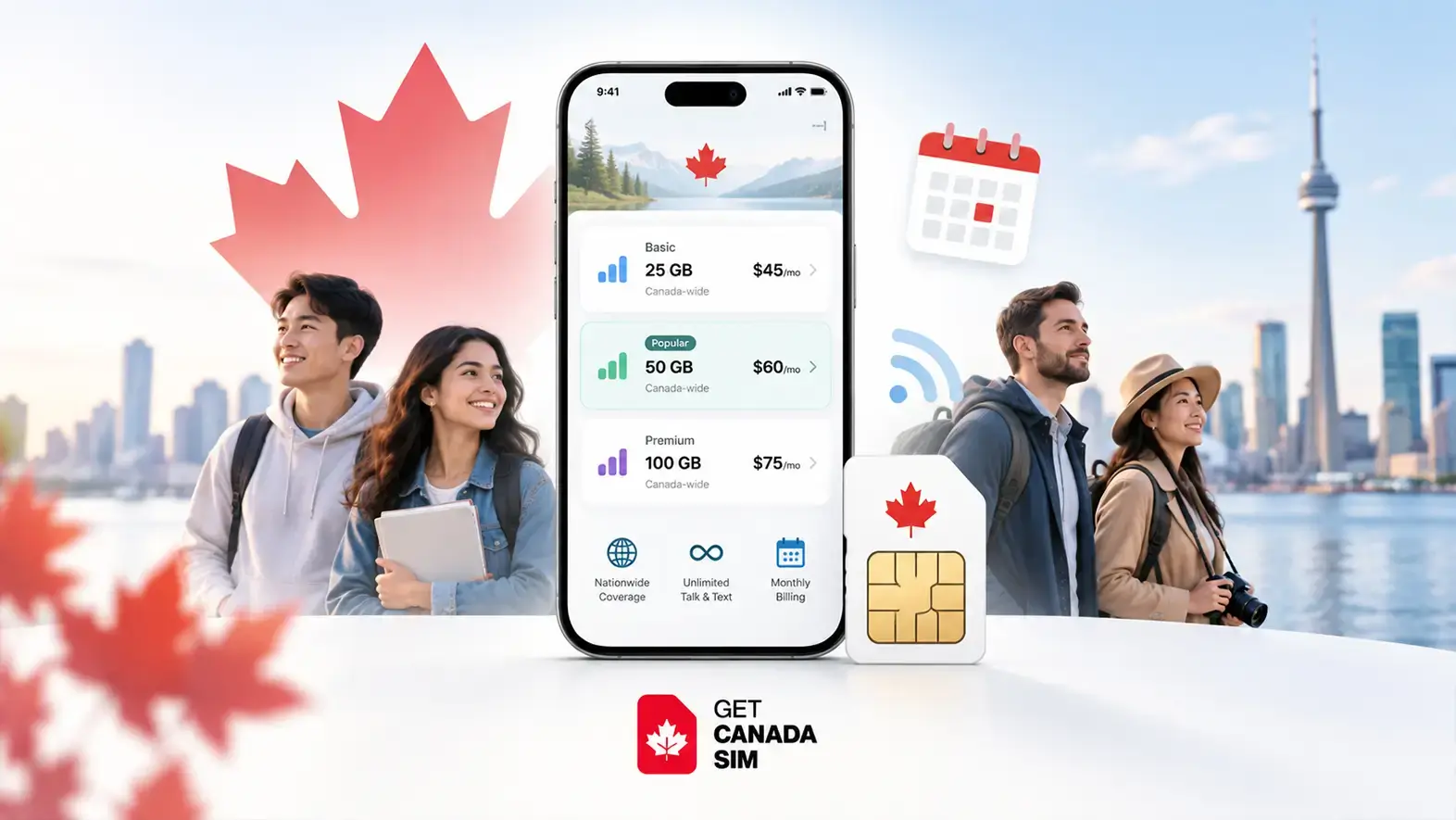
The best postpaid SIM card in Canada is not simply the plan with the most data. It is the one that gives you enough coverage, data, and features for the way you will actually use your phone—at a monthly cost you are comfortable keeping.
For most people staying in Canada for months or years, postpaid is worth comparing because it gives you ongoing monthly service and can provide access to higher-data plans, roaming features, and phone financing. But a tourist staying for two weeks may be better off with prepaid.
If you are searching “postpaid sim card canada”, start with these questions:
How long will I stay? Where will I live? How much data will I actually use? Do I need hotspot? Will I travel outside Canada? Am I bringing my own phone or buying one?
Those questions matter more than the carrier logo.
If you are preparing for Canada before travelling, GetCanadaSIM lets you compare current Canada SIM card plans and understand the setup before you arrive. You can also start from the GetCanadaSIM home page if you are still deciding between SIM, eSIM, prepaid, and postpaid.
Quick Summary
: Prepaid is usually a better choice for short stays or if you want to control your spending. Postpaid can be better if you plan to stay in Canada longer and want a regular monthly phone plan. Before choosing, compare the price, data, coverage, features and plan requirements.
Best Postpaid SIM Cards in Canada: Quick Answer
There is no one Best SIM Card for Canada for everybody. These are the main postpaid options worth comparing by need.
| If you are… | Start by comparing | What matters |
|---|---|---|
| Newcomer staying long term | Rogers, Fido, TELUS, Bell | Coverage, newcomer eligibility, monthly cost, data |
| International student | Fido, Koodo, Virgin Plus, Freedom, Rogers | Price, campus Wi-Fi, data needs, phone financing |
| Work-permit holder | Rogers, TELUS, Bell, Fido | Coverage, hotspot, reliable monthly data |
| Heavy data or hotspot user | Rogers, TELUS, Bell | High-speed allowance and what happens after it |
| Looking for lower-cost postpaid | Fido, Koodo, Virgin Plus, Freedom | Actual monthly price and coverage where you live |
| Buying a phone with the plan | Rogers, Bell, TELUS, Fido, Koodo, Virgin Plus, Freedom | Plan price plus device payments |
| Short-term tourist | Usually prepaid or travel eSIM instead | Trip length, data, Canadian number needs |
Before choosing among those networks, it is worth reading the Rogers vs Bell vs TELUS comparison. Coverage depends on where you actually live, study, work and travel—not whether a plan is prepaid or postpaid.
And if you are still unsure about the payment model itself, see Prepaid vs Postpaid in Canada before comparing carriers.
Which Postpaid SIM Card Is Best for Your Situation?
Instead of ranking carriers from 1 to 7, compare what each one is actually useful for.
| Provider | Worth comparing when… | Check before choosing |
|---|---|---|
| Rogers | You want a major national network, larger data options, phone financing or Canada/U.S./international features | Exact coverage, high-speed data limit, regular price after discounts |
| Fido | You want postpaid service at a different price level while using the Rogers-owned network | Data amount, hotspot, roaming and current promotion |
| TELUS | You want higher-data plans, international options, family plans or a dedicated newcomer offer | Price, coverage and which travel destinations are actually included |
| Koodo | You want flexible BYOD plans, 5G and tighter control over data use | Available perks, phone Tab conditions and coverage |
| Bell | You want national 5G/5G+ service, high-data options or device financing | High-speed allowance, promotional credits and total monthly bill |
| Virgin Plus | You want a mid-tier postpaid option with 5G, hotspot and phone choices | Current BYOD pricing and roaming costs |
| Freedom Mobile | You prioritize price and travel inclusions and have good coverage in the places you use your phone | Check its coverage map for your exact normal locations |
Current official plan pages show Rogers, Bell and TELUS offering high-data 5G/5G+ postpaid options, while Fido, Koodo and Virgin Plus occupy lower or mid-priced parts of the monthly market. Freedom's current plans also combine Canadian service with varying international roaming allowances. Offers change frequently, so compare the live price rather than relying on an old article or screenshot.
GetCanadaSIM is not another mobile network. It is a pre-arrival option for travellers who want to compare eligible Canadian plans before flying rather than starting the search after landing.
Postpaid & Prepaid: Which One Should You Choose?
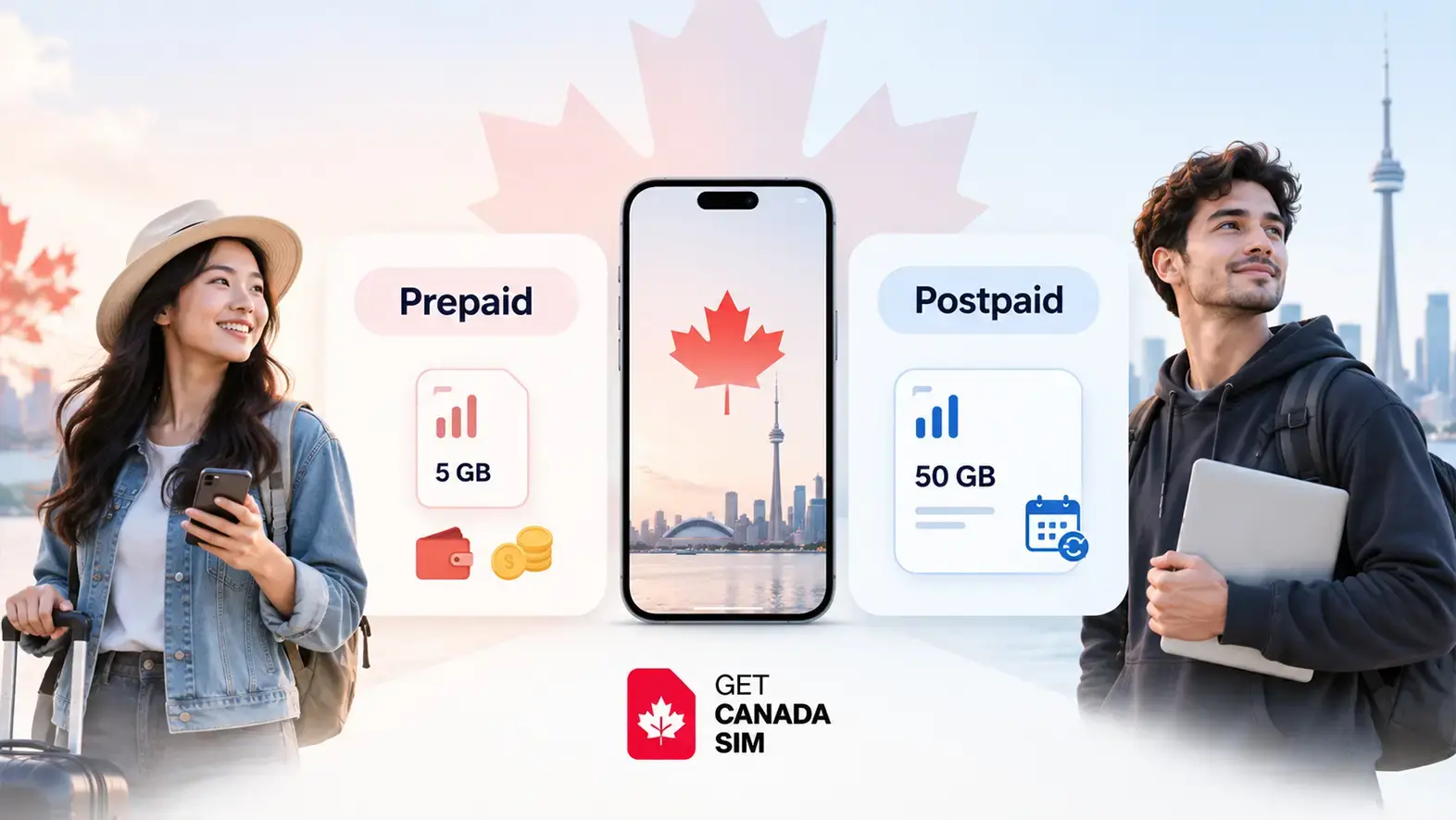
The difference is simple.
Postpaid: you have ongoing monthly service and receive a bill. Additional usage or other eligible charges may appear on that bill.
Prepaid: you pay before using the service. When the paid period or balance ends, you normally need to renew or top up to continue.
That is also how the CRTC distinguishes prepaid and postpaid wireless service.
| Choose postpaid when… | Choose prepaid when… |
|---|---|
| You are staying for months or years | You are staying for days or a few weeks |
| You want an ongoing monthly plan | You want a fixed short-term cost |
| You may finance a phone | You already own your phone |
| You want higher-data or premium plan options | You want to avoid a credit evaluation |
| You regularly use roaming or other monthly features | You mainly need basic Canadian service |
Many postpaid applications involve a credit evaluation, although eligibility processes vary and newcomer-specific programs exist. Rogers and TELUS, for example, currently advertise dedicated newcomer onboarding and accept qualifying immigration or international identification documents.
So being new to Canada does not mean you should automatically reject postpaid. It means you should check the eligibility requirements before assuming you qualify.
Best Postpaid SIM Cards in Canada by Your Situation
The right postpaid plan depends more on your situation than on which carrier is most popular. Here is a simpler way to narrow down your options.
For Newcomers and Permanent Residents
Good options to compare: Rogers, Fido, TELUS, Bell Best for: People moving to Canada for the longer term Look for: Canadian calling and texting, enough monthly data, good coverage near home and work, eSIM availability, newcomer eligibility Monthly price: Check current offers before ordering because prices and promotions change
Why it can work: If you are settling in Canada, a postpaid plan gives you an ongoing mobile service instead of having to recharge regularly. Some carriers also have newcomer application options, although identification and eligibility requirements differ.
If you want to arrange your service before travelling, you can compare available Canada SIM plans with GetCanadaSIM.
For International Students
Good options to compare: Fido, Koodo, Virgin Plus, Freedom Mobile, Rogers Best for: Students staying for a semester, a full program, or several years Look for: Affordable monthly price, enough data outside campus Wi-Fi, hotspot, eSIM and flexible plan options Data tip: You may need less mobile data than you think if you have Wi-Fi at your residence, college and library
Why it can work: Students usually need a plan that keeps the monthly cost reasonable without paying for data they rarely use. A moderate-data postpaid plan can be more practical than choosing the biggest package available.
Students can also read our Canada SIM guide for international students before choosing.
For Work-Permit Holders and Workers
Good options to compare: Rogers, TELUS, Bell, Fido Best for: People working in Canada for several months or longer Look for: Reliable coverage, enough data, hotspot support and Canada-wide calling Important: Check coverage carefully if your work takes you outside major cities
Why it can work: Workers may depend on mobile data for maps, work apps, video calls or connecting a laptop through hotspot. In that situation, reliable coverage and usable data can matter more than simply finding the cheapest plan.
See the Canada SIM options for work-permit holders for more detail.
For Heavy Data and Hotspot Users
Good options to compare: Rogers, Bell, TELUS Best for: Heavy streaming, frequent hotspot use or people who spend a lot of time away from Wi-Fi Look for: High-speed data allowance, reduced-speed rules, hotspot support and total monthly price Data tip: Do not choose an “unlimited” plan until you know how much data stays at full speed.
Why it can work: Higher-data postpaid plans can make sense when you genuinely use the extra data. But if you normally use 10–20 GB a month, paying more for 100 GB may give you very little real benefit.
For Someone Buying a Phone With the Plan
Good options to compare: Rogers, Bell, TELUS, Fido, Koodo, Virgin Plus, Freedom Mobile Best for: People who need both Canadian mobile service and a new phone Look for: Monthly plan price, monthly device payment, financing term and the total amount you will pay
Why it can work: Postpaid plans are commonly used with phone financing. But a cheap-looking device payment can become expensive when it requires a higher-priced mobile plan.
Always calculate:
phone payment + mobile plan + taxes + optional extras = your real monthly cost
If you already have an unlocked phone, a BYOD (bring your own device) plan may be simpler.
For Budget-Conscious Users
Good options to compare: Fido, Koodo, Virgin Plus, Freedom Mobile Best for: People who want postpaid service without automatically choosing a higher-priced plan Look for: Actual monthly price, data allowance, network coverage and promotional conditions
Why it can work: The cheapest advertised plan is not always the cheapest plan for you. A lower price loses its value if coverage is poor where you live or if you need to add features later.
Think about the lowest-cost plan that covers your normal month, not the plan with the lowest number on the website.
For Tourists and Short-Term Visitors
Better starting point: Usually prepaid SIM or travel eSIM Best for: Trips lasting a few days or several weeks Look for: Simple activation, enough trip data, Canadian calling if needed and no unnecessary ongoing billing Postpaid makes more sense when: You will remain in Canada for several months rather than taking a short holiday
Why: A tourist usually does not need the longer-term features that make postpaid useful. Paying in advance for a prepaid SIM or eSIM can be simpler and easier to control.
See our Canada SIM card guide for tourists if your stay is short.
A Simple Way to Decide
If you are still unsure, use this:
| Your situation | Start with |
|---|---|
| Moving to Canada long term | Postpaid |
| Studying in Canada | Compare postpaid and prepaid |
| Working in Canada for months or years | Postpaid |
| Need a phone with monthly payments | Postpaid |
| Use lots of mobile data | High-data postpaid |
| Visiting for a few weeks | Prepaid or travel eSIM |
| Want strict control over spending | Prepaid |
| Already have Wi-Fi almost everywhere | Lower-data plan |
The best postpaid SIM in Canada is not the same for everyone. A newcomer may care about easy setup and coverage, a student may care about monthly cost, and a worker may need reliable data and hotspot. Start with what you actually need, then compare the plans that provide it.
Compare current Canada SIM plans.
What Documents Do You Need for a Postpaid SIM in Canada?
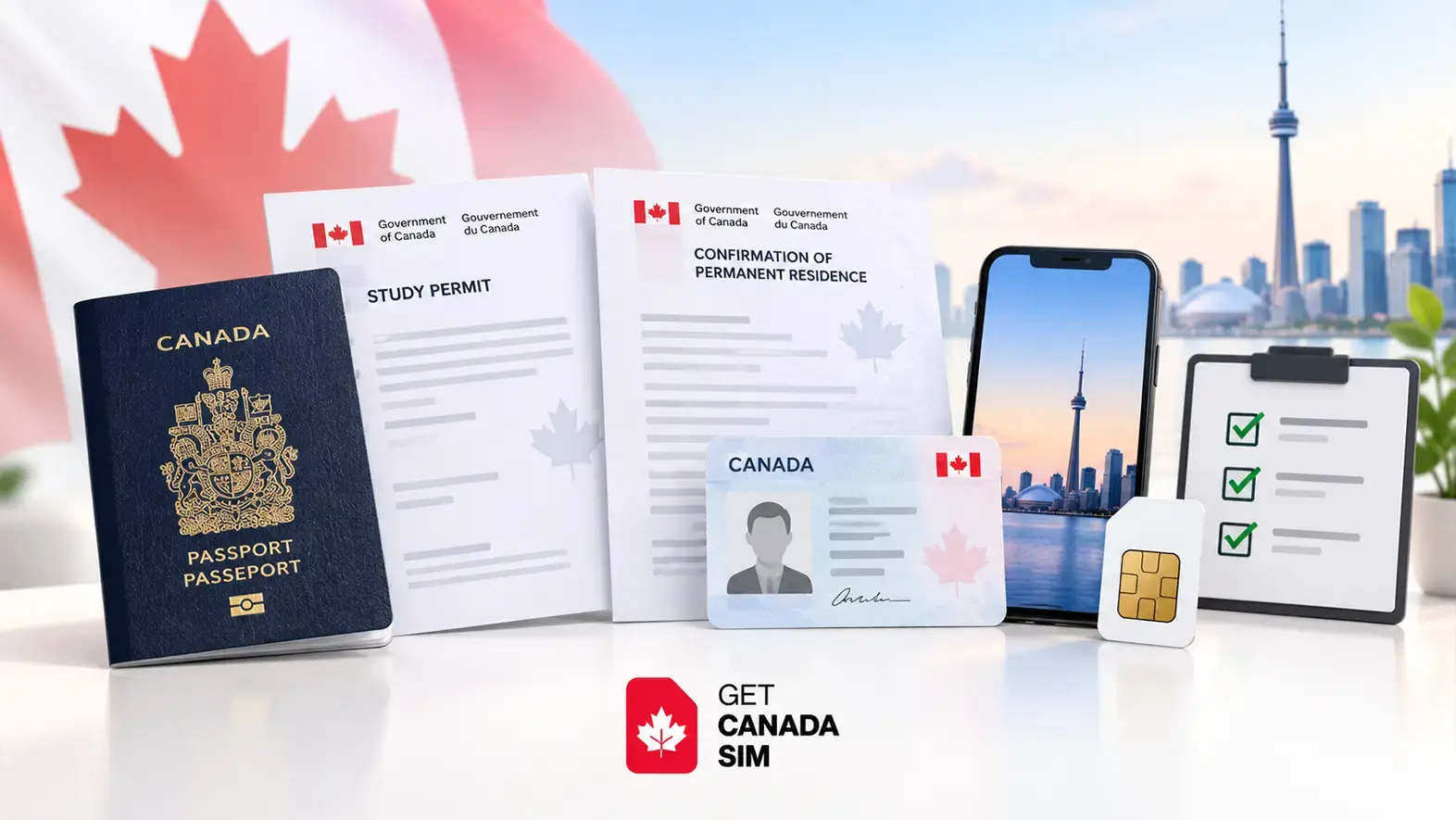
The documents you need depend on the carrier and how you apply.
If you apply directly with a Canadian carrier, you will normally need valid identification. Newcomer programs may ask for documents such as:
- A valid passport
- A study permit or work permit
- A permanent resident card or Confirmation of Permanent Residence (COPR)
- A Canadian address, depending on the provider
- Additional information for identity or credit verification, depending on the plan
For example, Rogers currently asks newcomers for a passport together with a study permit, work permit, PR card or COPR. TELUS also asks eligible newcomers for a passport and proof of their status in Canada.
The process is different when ordering through GetCanadaSIM. Regular online orders do not require you to upload documents when you first place the order. For some partner-assisted applications, you may be asked for a passport and a relevant visa, study permit, work permit or permanent residence document for verification.
Requirements can change by carrier and plan, so always check what is needed before applying.
How Can You Get a Postpaid SIM Card in Canada?
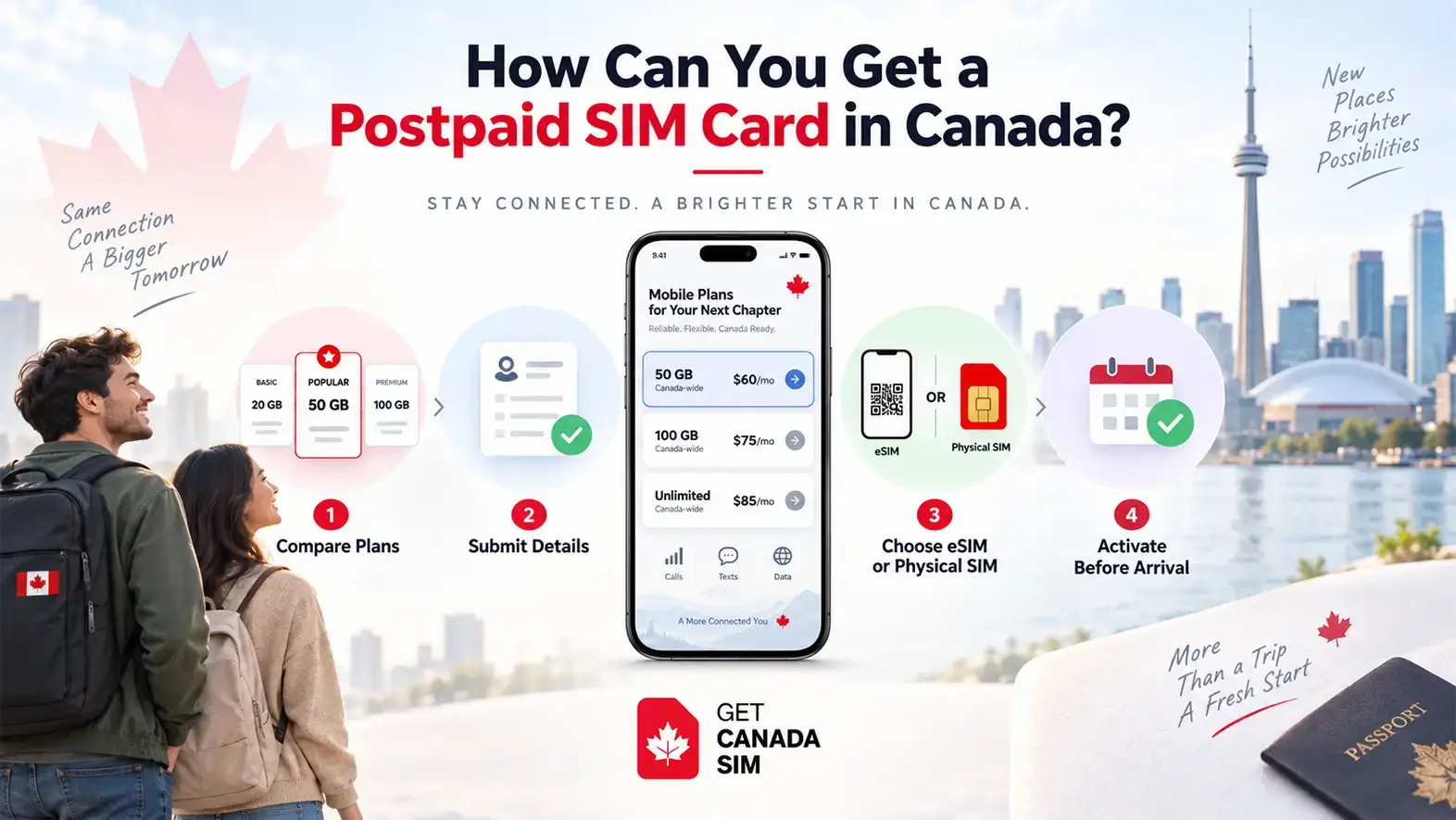
You can normally get a postpaid SIM by applying directly with a Canadian mobile carrier or through an eligible pre-arrival service.
If you are travelling to Canada, GetCanadaSIM lets you arrange an eligible postpaid Canadian SIM or eSIM before your flight.
The process is simple:
1. Compare the plans Start by checking the available postpaid SIM plans for Canada and choose one that matches your data, calling and travel needs.
2. Submit your details Complete the order with your contact information, arrival date and other required details. Any additional verification requirements will depend on your order.
3. Choose eSIM or physical SIM If your phone supports eSIM, you can receive the eSIM digitally. If you prefer a physical SIM, GetCanadaSIM can send it to the Canadian delivery address you provide.
4. Get ready for activation GetCanadaSIM says the line is activated up to 24 hours before the arrival date provided with the order, so you can prepare your Canadian mobile service before reaching Canada.
You can see the complete process in the How GetCanadaSIM works guide.
If you are already in Canada, you can also apply directly through a carrier online or in a store. In that case, have the required identification ready and check whether the provider requires a credit check, deposit, or other eligibility information.
Which Plan Makes Sense for a Newcomer?
If you are moving to Canada rather than visiting for a holiday, think about your first few months rather than only your first week.
A newcomer may use mobile data heavily at first for maps, transit, video calls, apartment searches and general browsing while home internet is still being arranged.
That makes three things especially important:
coverage + enough data + flexibility.
You do not automatically need the largest plan.
If your apartment, workplace and most places you visit have Wi-Fi, a moderate-data postpaid plan may be enough. If you will tether your laptop or do not know when home internet will be available, a larger data allowance and hotspot support become more important.
For a deeper newcomer comparison, see the Canada SIM guide for newcomers.
People looking for the Best SIM Cards & ESIMs For Newcomers To Canada should also check whether their phone supports eSIM before deciding based on price alone. A good plan is useless if the device cannot connect to it.
What About International Students?
Students should be especially careful about buying too much data.
Imagine you have Wi-Fi in your residence, classrooms, library and campus buildings. Your mobile data may mainly cover commuting, maps, messaging, music and occasional video.
In that case, paying extra every month for an enormous data allowance may add little value.
But the calculation changes if you commute a long distance, watch video on the train, work away from campus or tether a laptop.
For students, compare:
monthly price → actual data need → campus/home Wi-Fi → hotspot → coverage → plan duration.
The international student SIM guide goes deeper into that situation.
What About Work-Permit Holders?
Someone working in Canada may value a different feature: hotspot.
If you are a contractor, field worker, salesperson, driver or remote worker, being able to connect a laptop through your phone can matter more than receiving another 30 GB that you never use.
Coverage also matters if your job takes you outside major city centres.
For that situation, compare the dedicated SIM options for work-permit holders.
A postpaid monthly plan can make sense when your stay is long enough to justify ongoing service. Your immigration or work status itself does not determine which phone plan you must buy.
Should Tourists Get Postpaid?
Usually not for a short trip.
Someone searching “canada prepaid sim card for tourist” is probably closer to the right product than someone searching for a long-term postpaid account.
For a one- or two-week holiday, prepaid or a travel eSIM can reduce unnecessary setup and ongoing billing.
The decision becomes:
Need only internet? A data only sim card Canada or travel eSIM may be enough.
Need Canadian calls and SMS too? Compare a local prepaid SIM/eSIM with a Canadian number.
Staying for several months? Then comparing postpaid becomes more reasonable.
See the full Canada SIM card for tourists comparison.
That is also why the Cheapest SIM Cards for Travelling to Canada are not necessarily the cheapest monthly plans. A $30 monthly plan is not cheaper if you must keep paying for a service you only need for ten days.
Is a prepaid or postpaid good for a Canada SIM?
For Canada, neither prepaid nor postpaid is always better. The better choice depends on how long you’re staying, how predictable you want your bill to be, and what kind of plan you qualify for.
| Choose Prepaid if… | Choose Postpaid if… |
|---|---|
| You’re visiting Canada short term | You’ll stay in Canada for months or years |
| You want to pay before using the service | You’re comfortable receiving a monthly bill |
| You want tighter control over spending | You want access to a wider range of monthly plans |
| You want a simpler setup with fewer commitments | You may want device financing or other postpaid features |
| You prefer avoiding possible overage charges | You’re okay managing possible extra usage charges |
The CRTC defines prepaid as service purchased before use, while postpaid is billed after use and can include additional usage charges.
For someone moving to Canada, I’d compare both instead of automatically choosing prepaid. A newcomer who expects to stay long term may find a postpaid plan more suitable, while a tourist or someone who wants maximum spending control may prefer prepaid. Credit-check or deposit requirements can also vary by provider and plan, so that should be checked before ordering.
For Get Canada SIM content, a strong simple answer would be:
Prepaid is usually better for short stays and spending control. Postpaid can make more sense for people settling in Canada who want an ongoing monthly mobile plan. Compare the actual price, data, coverage, inclusions and eligibility before deciding.
Is an Unlimited-Data Postpaid Plan Worth It?
A search for “canada sim card unlimited data” needs one important warning:
unlimited does not always mean unlimited full-speed data.
Some Canadian plans include a fixed amount of high-speed data and then allow continued use at a reduced speed. Rogers, Bell and TELUS currently publish plans that work this way.
So compare four things:
high-speed data → reduced speed → hotspot rules → monthly price.
If you use 12 GB per month, a 100 GB or unlimited plan may be unnecessary.
If you regularly stream away from Wi-Fi, tether a laptop or use 80–100+ GB, the extra capacity may genuinely matter.
A recent Canadian Reddit discussion illustrates the problem well: one user was paying for a 100 GB plan while saying they normally used only about 5 GB. That is anecdotal, not market data, but it highlights a common mistake—buying impressive allowances instead of buying around real usage.
What About Canada SIM Card Plans With Phone Financing?
Canada sim card plans with phone are really two purchases combined:
mobile service + smartphone financing.
Postpaid is often where Canadian carriers make financed devices available. Fido, for example, requires an eligible postpaid plan for its device-financing program, while Rogers, Bell, TELUS, and other postpaid carriers also offer device-payment options.
Do not judge the deal from the advertised phone payment alone.
Calculate:
monthly plan + monthly device payment + taxes + any optional services − genuine credits.
If you already own a good unlocked phone, BYOD—bring your own device—makes the comparison much cleaner.
Is TELUS a Good Postpaid Option?
People searching “telus sim card canada” should separate the network from the plan.
TELUS currently offers 5G/5G+ monthly plans, BYOD options, family discounts, and dedicated newcomer plans. Some plans include Canada/U.S. or broader international usage, depending on the tier.
That can make TELUS relevant for newcomers, workers, families and travellers.
But do not choose it solely because it is TELUS.
Check coverage at your home, workplace, or campus first, then compare its current monthly price against Rogers, Bell, Fido, Koodo, Virgin Plus, and Freedom.
The same rule applies to every carrier.
What Is the Cheapest SIM Card in Canada?
The query “cheapest sim card canada” sounds simple, but it often leads to a bad decision.
The cheapest advertised plan might have too little data, slower speeds, limited roaming, weaker coverage at your location or no feature you actually need.
When comparing sim card plans Canada consumers should ask:
What is the lowest-cost plan that fully covers my normal month?
That is a much better definition of value.
Someone using 8 GB does not save money by paying more for 100 GB simply because the price per gigabyte looks better.
Someone who travels frequently between Canada and the U.S., however, may save more overall by paying slightly more for a plan that already includes the usage they need.
Canada SIM Card Plans: What Should You Check Before Ordering?
Before choosing among Canada SIM Card Plans, compare these eight things together:
| Check | Why it matters |
|---|---|
| Coverage | Your plan needs to work where you actually live and travel |
| Monthly price | Look beyond temporary promotional pricing |
| Data | Buy around realistic usage |
| Full-speed limit | Especially important on “unlimited” plans |
| Hotspot | Essential for some workers and remote users |
| Calls and texts | Check Canada-wide and international conditions |
| Roaming | Canada/U.S./Mexico/global inclusions vary widely |
| Phone cost | Keep service and device financing separate in your calculation |
And remember that Canada changed an important fee rule in 2026. Since June 12, 2026, the CRTC prohibits activation and plan-modification fees for covered retail telecommunications services. Optional products or services can still have separate charges, so read what a fee is actually for.
How to Set Up Your Canadian Phone Plan Before You Arrive
You do not necessarily need to wait until you are standing in a Canadian airport or shopping mall.
If you already know you will need Canadian service, use this sequence:
First, decide whether you need prepaid or postpaid.
Second, estimate your actual data needs.
Third, check coverage for the city, campus or workplace where you will spend most of your time.
Fourth, confirm that your phone is unlocked and compatible.
Fifth, choose between eSIM and physical SIM.
Finally, review the complete price, activation process, cancellation terms and support options before ordering.
GetCanadaSIM explains its pre-arrival process on the How it works page.
If you are coming from a specific country, it can also help to compare your home carrier's roaming against a Canadian plan before departure. For example, travellers can use the Canada SIM from India guide or the Canada SIM from the Philippines guide rather than assuming the same answer applies to every departure country.
Frequently Asked Questions
What is the best postpaid SIM card in Canada?
There is no universal best postpaid SIM. Rogers, Bell and TELUS are major national providers; Fido, Koodo and Virgin Plus provide other monthly options, while Freedom Mobile can be worth comparing based on location and price. Choose using coverage, data, monthly cost, hotspot, roaming and device requirements.
Is prepaid or postpaid better in Canada?
Postpaid can suit people staying for months or years who want ongoing monthly service, larger data options or phone financing. Prepaid can be simpler for tourists, light users and people who prefer paying before using the service.
Can newcomers get postpaid plans in Canada?
Yes, but eligibility differs by provider and plan. Some regular postpaid accounts involve credit evaluation, while carriers also operate newcomer programs with specific identification and eligibility requirements. Check the exact conditions before applying.
Is postpaid better for international students?
It can be if the student is staying for a semester or longer and the monthly plan offers good value. But students with strong campus and home Wi-Fi should avoid paying extra for data they will rarely use.
Are postpaid SIM cards more expensive than prepaid?
Not always. Promotions can make postpaid competitive with prepaid. Compare the total monthly cost and the features you actually need rather than assuming one billing type is automatically cheaper.
Can I get unlimited data in Canada?
Yes, some Canadian carriers offer plans marketed as unlimited. However, full-speed data may be limited to a specific allowance before speeds are reduced. Always read the fair-use and speed terms.
Can I get a Canadian postpaid plan with a new phone?
Yes. Major carriers and several secondary brands offer phone financing with eligible postpaid plans. Compare the service price and device payment separately before deciding.
Is a data-only SIM better than postpaid?
For a short tourist trip where you only need maps, browsing and messaging apps, it can be. For longer stays where you also want regular Canadian calling and SMS, a full Canadian mobile plan may be more practical.
Final Answer: Choose the Plan Around Your Life
The best postpaid SIM cards in Canada are not the ones with the biggest data numbers.
The right choice is the plan that fits where you live, how much data you use, how long you will stay, whether you need hotspot or international features, and whether you already own your phone.
A newcomer staying for years may benefit from postpaid.
A student should first look at how much Wi-Fi they already have.
A worker may care more about hotspot and coverage.
A short-term tourist will often be better served by prepaid or a travel eSIM.
And someone searching for the cheapest SIM card Canada has should focus on the cheapest plan that actually meets their needs—not simply the lowest advertised number.
If you are preparing to travel, compare the current GetCanadaSIM plans side by side before choosing. The goal is not to buy more mobile service.
It is to buy enough.
Follow Get Canada Sim on Google
Make Get Canada Sim a preferred source to find our latest Canada SIM and eSIM guides in Google Search.